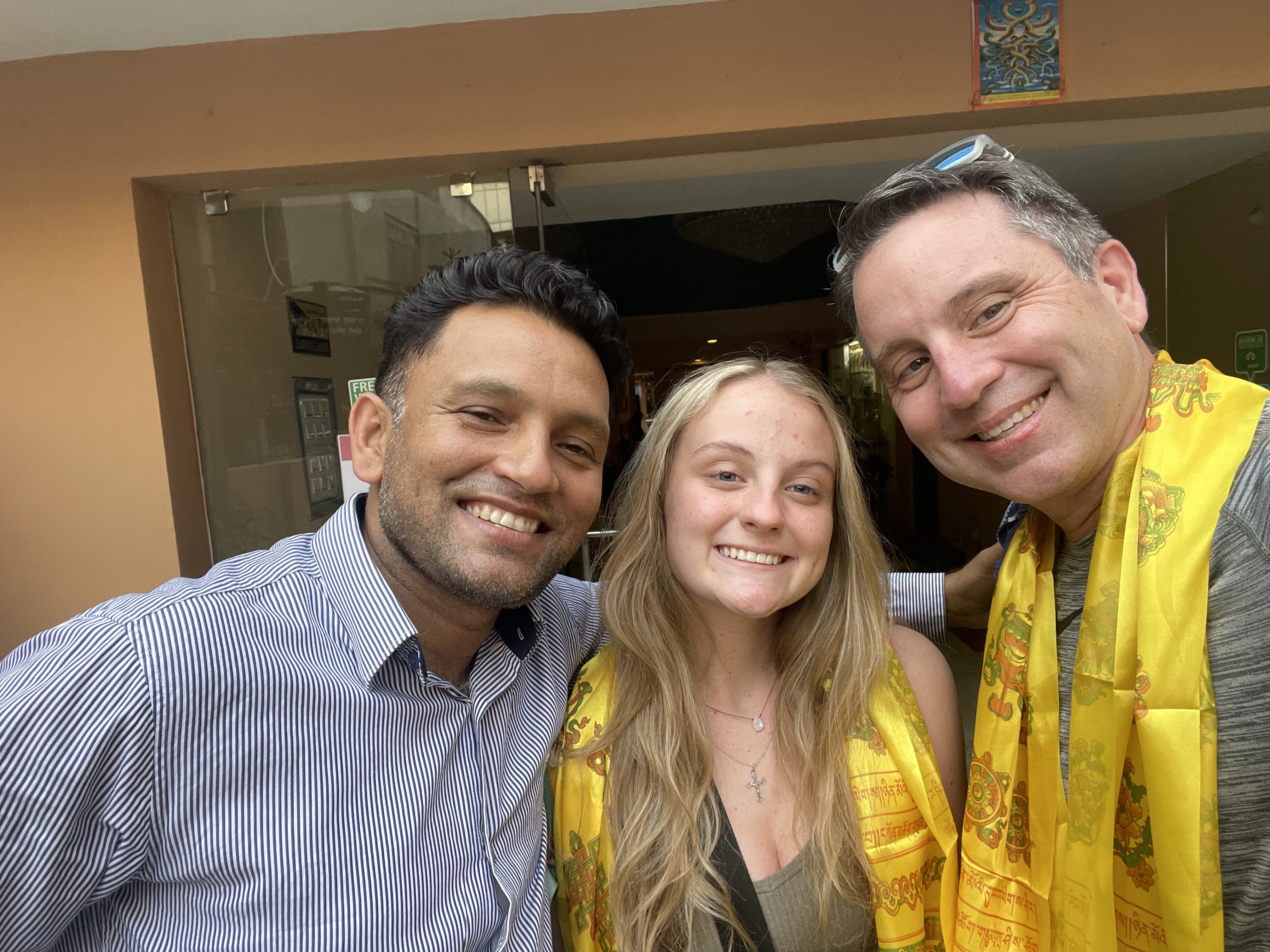
I have been to Nepal seven times since 2012, and the question I get most from friends and family planning their first trip is the same one every time: which trek should I do? This is the post I send them.
This is the guide I wish someone had handed me before my first trip. It covers every major trek option in Nepal, who each one is actually for, what they cost, how hard they are, and the honest catch for each. I built it as the pillar to come back to. You can skim the table below to get the lay of the land, then read the section on whatever trek catches your eye.
The point of this post is not to push you toward any particular trek. It is to help you figure out which one fits your time, your fitness, your budget, and what you actually want out of a Nepal trip. After that, you can take the quiz or just ask me directly if you want a sanity check.
Quick context on me: I am Derik, I live in Minneapolis, I am not a guide. I am a friend who has been to Nepal seven times and who built this site because so many people kept asking. I have a referral relationship with Third Rock Adventures, the one operator I trust. Here is why I work with them. I get a small fee when readers book through me, which is how the site stays free. Everything I recommend, I would recommend anyway.
| Trek | Best for | Total days from US | Trail days | Max elevation | Difficulty | Best months | Cost (package) |
|---|---|---|---|---|---|---|---|
| Everest Base Camp | Bucket-list Everest, prior altitude experience | 18-21 | 12-14 | 5,545 m (Kala Patthar) | Moderate-Hard | Late Oct to mid Dec, Late Mar to mid Apr | $2,000-3,200 |
| Annapurna Base Camp | First big trek, families with fit teens | 14-17 | 7-11 | 4,130 m | Moderate | Same as EBC | $1,500-2,200 |
| Annapurna Circuit | Most varied terrain in Nepal | 18-22 | 12-16 | 5,416 m (Thorong La) | Moderate-Hard | Late Oct to early Dec, Late Mar to mid Apr | $1,800-2,800 |
| Gokyo Lakes + Renjo La | Everest views without EBC crowds | 17-20 | 12-14 | 5,360 m (Renjo La) | Hard | Same as EBC | $2,200-3,200 |
| Three Passes | Experienced Khumbu trekkers with 21+ days | 21-25 | 18-21 | 5,535 m (Kongma La) | Very Hard | Same as EBC | $2,800-4,000 |
| Langtang Valley | Shorter trek, less crowded, close to KTM | 13-16 | 7-10 | 4,984 m (Kyanjin Ri) | Moderate | Same as EBC | $1,200-1,800 |
| Poon Hill / Ghorepani | Quick taste, families, first-timers | 8-10 | 3-5 | 3,210 m | Easy-Moderate | Late Oct to mid Dec, Mar to mid Apr | $800-1,200 |
| Kathmandu Valley (cultural) | Pre/post-trek immersion, low-altitude option | 7-10 | n/a (cultural) | 1,400 m | Easy | Year-round | $800-1,200 |
Everest Base Camp: best for the bucket-list Everest pin
EBC is the trip everyone has heard of, and there is a reason for that. You walk for twelve to fourteen days through Sherpa country, with Ama Dablam in front of you for most of it, and you finish with a sunrise on Kala Patthar that is the entire trip in a single thirty-minute window. The Khumbu valley is one of the great places on earth and the trail community around Namche and Pheriche is its own small universe.
The honest part: you cannot see Everest from Base Camp itself. You see it from Kala Patthar the next morning. Anyone telling you otherwise is selling something. The other honest part: this is a long trip with real altitude. Eighteen to twenty-one days of your time, two buffer days for Lukla flight weather, and a real cardio base. People who try to do it short and cheap regret it.
Who I would steer away: anyone with under fourteen total days, no prior 3,000 m+ experience, or a recent cardiac concern. The altitude is manageable but not negotiable.
Annapurna Base Camp: best for the first big Nepal trek
If a friend asks me which trek they should do for their first time in Nepal, the answer is almost always ABC. It is the most accessible of the real Himalayan treks. Seven to eleven trail days, max elevation 4,130 m (very manageable for a first-timer who has prepped), and the payoff is the Annapurna Sanctuary, which is one of the most spectacular natural amphitheaters on earth.
I took my younger daughter Callie there at age twelve and she crushed it. The valley walk in is forested, varied, and full of village rhythm. The push into the Sanctuary on the final day is genuinely cinematic. You wake up at 14,000 feet surrounded by 7,000 m peaks on all sides. People cry. I have cried.
Who I would steer away: anyone who wants the Everest name on their wall. ABC does not give you that, and that is fine, but you should know going in.
Annapurna Circuit: best for the most varied landscape on any Nepal trek
The Circuit is the most diverse single-trek experience in Nepal. You start in Hindu, Nepali-speaking, terraced-rice-paddy lowland country. You walk for ten days. You end up in Tibetan Buddhist, Tibetan-speaking, juniper-and-prayer-flag highland country. That cultural sweep is unique to the Circuit. ABC does not do it. EBC does not really do it (the Khumbu is all Sherpa Buddhist).
The honest part for 2026: the road has changed the bookend days. You can no longer walk the classic 21-day version without spending days on a dusty road shared with jeeps. The smart 2026 itinerary is twelve to fourteen days, you drive the lower sections, you walk the high country, you cross Thorong La at 5,416 m, and you get the whole cultural sweep without the road-walking misery.
Who I would steer away: anyone who cannot take fourteen-plus days off. The Circuit needs the room to breathe.
Gokyo Lakes + Renjo La: best for Everest views without the EBC crowds
This is my personal favorite Everest-region trek. I did it with my daughter Camryn and the Renjo La pass added the photo I still use as my desktop. You get the Everest view from Gokyo Ri, six turquoise glacier lakes that look fake, and the high Renjo La pass back into the Bhote Koshi valley. All of it quieter than the main EBC trail.
The trade-off is the difficulty. The Renjo La crossing at 5,360 m is real, the days are long, and you need solid altitude experience. This is not a starter trek. This is the second or third Khumbu trip for someone who has already done EBC and wants the better photo and the smaller crowd.
Who I would steer away: first-time high-altitude trekkers. Do EBC or ABC first, then come back for Gokyo. The pass is unforgiving on a bad acclimatization day.
Three Passes: best for experienced Khumbu trekkers ready for a real circuit
The Three Passes loop is the most complete Everest-region experience there is. You cross Kongma La (5,535 m), Cho La (5,420 m), and Renjo La (5,360 m), you include EBC and Gokyo as side trips, and you walk for 18 to 21 days through the high Khumbu. By the end of it, you have done the Khumbu in a way that very few tourists ever do.
The honest part: this is hard. You need 21+ days, prior 4,000 m+ time, real cardio, and a good guide who knows the conditions on each pass that morning. People die on these passes when the weather turns. Conservative pacing matters more than ambition.
Who I would steer away: anyone without prior altitude experience or anyone trying to do it in fewer days. The route exists at 21 days for a reason. Compressing it kills people.
Langtang Valley: best for a shorter, less-crowded Himalayan trek close to Kathmandu
Langtang is the underrated trek of Nepal. Seven to ten trail days, gentle altitude profile (4,984 m at Kyanjin Ri is the high point and that is a side hike, not the trail), close to Kathmandu (no Lukla flight), and one of the most beautiful side valleys in the country. The 2015 earthquake hit the valley hard and the community rebuilt with remarkable resilience. Going there now is one of the better ways to support that recovery directly.
What you do not get: the Everest or Annapurna name on the wall. If brand recognition matters to you, Langtang will not satisfy. If you want a real Himalayan trek without the time or money commitment of EBC or the Circuit, this is the one.
Who I would steer away: people who explicitly want Everest or Annapurna mountain names. Langtang is its own thing. That is the feature, not the bug.
Poon Hill / Ghorepani: best for a quick taste, families, and first-timers
If you have under ten days and you want a real Himalayan experience, Poon Hill is the answer. Three to five trail days, max elevation 3,210 m (no altitude risk), and the sunrise from the Poon Hill viewpoint over the Annapurna and Dhaulagiri ranges is one of the great trekking moments anywhere. I have sent families with seven-year-olds on this trek and they finished it.
This is foothill country, not high Himalaya. You will not feel like you are above the world. You will feel like you are walking through some of the prettiest forested ridge country anywhere, with sunset and sunrise views that make the trip feel earned without breaking your knees.
Who I would steer away: anyone who wants the high-altitude badge. Poon Hill is a sampler, not a main course. Plan it as the first taste, not the destination.
More on the Annapurna region →
Kathmandu Valley + Cultural Immersion: best for pre/post-trek time or a non-trek Nepal trip
This is the trip a lot of people should be doing but do not realize they can. Spend a week across the Kathmandu Valley temples (Boudhanath, Swayambhunath, Pashupatinath, Bhaktapur, Patan), throw in a few light Sherpa-region day hikes if you want elevation, and you have a Nepal trip without a single multi-day trek. For people who are not sure they want to commit to the altitude or the trail days, this is the perfect entry point.
It is also what I tell people to add to the front or back end of any Himalayan trek. Three days of cultural recovery in Kathmandu after EBC is genuinely one of the best parts of the whole trip. The food, the temples, the Boudhanath stupa at sunset.
Who I would steer away: nobody, actually. This is a flexible add-on or standalone. The only failure mode is rushing it.
How to actually choose between them
Here is the framework I walk friends through. It is not scientific. It is the conversation I have over coffee.
If this is your first big trek in Nepal, the answer is almost always Annapurna Base Camp.
The math is hard to argue with. ABC gives you the Himalaya at a manageable altitude (4,130 m), a reasonable time commitment (14-17 days from the US), and a budget that is not punitive ($1,500-2,200 for a full guided package). You get the Annapurna Sanctuary, which photographs better than EBC. You get a gentle introduction to altitude. You get the village walk-in. And if you decide you love it, you can come back for EBC the next time. More on first-time Nepal trekking →
If Everest is the goal, here is the honest conversation about EBC versus Gokyo.
Most people pick EBC because they have heard of it. That is fine. If your photo album needs Kala Patthar sunrise, do EBC. If you have done one Khumbu trek before and you want the better photos and fewer people, do Gokyo with the Renjo La pass. My full EBC versus ABC piece walks through the comparison in detail.
If you only have 10 days or under, the answer changes completely.
Poon Hill, Langtang, or a Kathmandu Valley cultural trip. EBC and the Circuit are off the table. Compressing them does not work. This is one of the most common Nepal-trek planning mistakes.
If you have already done a Khumbu trek and want something different, Three Passes or the Circuit are the next step.
Three Passes for the experienced Khumbu loop, the Annapurna Circuit for the cultural sweep across two distinct regions. Both require real time off (21+ days for Three Passes, 14-18 for the Circuit) and the kind of prior altitude experience that lets you stop worrying about the daily climb and start enjoying it.
And the honest part: who shouldn’t trek in Nepal at all.
People with recent cardiac events, untreated sleep apnea, or recent pulmonary issues should talk to their doctor first and probably not go. People in active mental health crises should not be 14 days from a hospital. People who do not actually want to be uncomfortable for two weeks should pick a different trip. Nepal trekking is a great experience. It is not a great experience for everyone in every life moment.
When to start the conversation
If you are six months out, now is the time to start. If you are three months out, you can still pull it off but the good operators get booked. If you are eight weeks out, you can still do it, but you are working with the operators who have last-minute capacity, which is usually a smaller pool.
Three places to go next.
- Take the 2-minute trek quiz if you want my pick based on your time, budget, and fitness.
- Read the 2026 cost guide if budget is the question driving everything else.
- Just send me a note if you want to talk through your specific situation. I read every one and reply within a day or two.
One last thing. The reason I built this whole site is that the existing Nepal trekking content online is either thin, written by people who have not been, or written by operators trying to book you. I have nothing to sell you directly. I am the friend who has been seven times and will tell you what I would actually do. That is the offer.