I get this question once a week. From an active 50-something who runs, hikes, lifts, has done some altitude, and wants to do a Nepal trek before they cannot. Here is my honest take.
Short answer up front: Annapurna Base Camp is the right pick for most fit adults 50 to 65. Poon Hill is a great gentler alternative or a warm-up. EBC is possible with proper prep but requires more honest self-assessment than most people give it.
Now the longer answer, which is the answer you actually came here for.
Why ABC is the right call for 50+
Three reasons. First, the altitude profile is friendlier. ABC tops out at 4,130 m. EBC tops at 5,545 m at Kala Patthar. That 1,400 m difference is not a small thing when you are 55 and your body recovers at a different rate than when you were 35. Altitude headaches, acclimatization difficulty, and the risk of HACE or HAPE all scale steeply with peak altitude.
Second, the trip is shorter. ABC is 7 to 11 trail days. EBC is 12 to 14. At 50+, the cumulative wear matters. Knees that handle a one-week hike fine can be in real pain by day 11 of a two-week trek with 800 m of daily descent on rough trail.
Third, the bailout options are better. From most of the ABC route you can be back to Pokhara within a day if something goes sideways. From the upper Khumbu it is a helicopter or a multi-day retreat. For most 50+ trekkers the lower-risk profile of ABC is worth the slight scenery trade.
The honest knee conversation
This is the part nobody wants to talk about, so I will. If you have any knee issues, the descents matter more than the ascents. Both ABC and EBC have descents that hit your knees hard for hours at a time. The Khumbu trail has more stone-step descents that are particularly tough on quads and knees.
What helps:
- Trekking poles. Not optional after 50. They reduce knee impact on descents by 20-30 percent depending on whose study you read.
- Real broken-in boots with ankle support. The ankle support matters more on rough stone descents than on flat trail.
- A porter for your main pack. Carry only a daypack. Save your knees the 15 kg.
- Pre-trip knee training. Spend 2 to 3 months doing weighted descents on stairs or hills. Your knees adapt with training.
If your knees have a known condition (meniscus, ACL repair, late-stage arthritis), have an honest conversation with your orthopedist before you book.
Altitude after 50
Your body acclimatizes more slowly. That is not a guess, that is a measured physiological fact. What this means in practice: you need more acclimatization days than the standard itineraries provide.
For ABC at 4,130 m max, this is a minor issue. Most fit 50+ adults handle it with the standard 7-10 day pacing. For EBC at 5,545 m it is a bigger consideration. I would build in an extra acclimatization day at Pheriche or Dingboche for a 50+ trekker.
Diamox (acetazolamide) is worth a conversation with your doctor before either trip. It is well-studied, generally safe, and reduces altitude sickness risk meaningfully.
What about EBC?
Doable. Not the default. The 55-year-old who runs marathons, has been to 4,500 m in the Andes, and trains seriously can do EBC and have a great trip. The 55-year-old who hikes occasionally, has never been above 3,000 m, and figures they will train when they get there should not do EBC. Should do ABC.
Honest self-assessment is the whole game. If you are not sure which category you are in, the answer is ABC. The good news is ABC is one of the most spectacular treks on earth. You are not getting a consolation prize.
If you want EBC and you are 50+, here is what I would do:
- Train hard for six months: weighted hill hikes, stairs, cardio at 80% effort 3x a week
- Add at least one extra acclimatization day to the standard itinerary
- Get a guide who is comfortable making conservative pacing calls on your behalf
- Take Diamox prophylactically from Namche onwards
- Build in a real Kathmandu rest day at the end
Poon Hill / Ghorepani for the gentler option
If ABC feels like too much, or you have a partner who is less fit, Poon Hill is a real Himalayan experience without the heavy commitment. 3 to 5 trail days, max altitude 3,210 m, sunrise views over Annapurna and Dhaulagiri that are genuinely world-class. Wife/husband/family combinations who mix fitness levels make this work beautifully.
Why a quality operator matters more at 50+
Two reasons.
First, emergency response. Most altitude emergencies happen to people on the borderline of their physical limit. That is more common at 50+ than at 30. You want an operator whose answer to “what happens if I get HACE at Lobuche” is not a generic answer about helicopters. It is a specific answer with names, costs, and a chain of decisions they have made before.
Second, pacing flexibility. Younger trekkers can power through a bad day. Older trekkers benefit from operators who will adjust the schedule when you need a rest morning. Cheap operators run a fixed schedule. Quality operators flex.
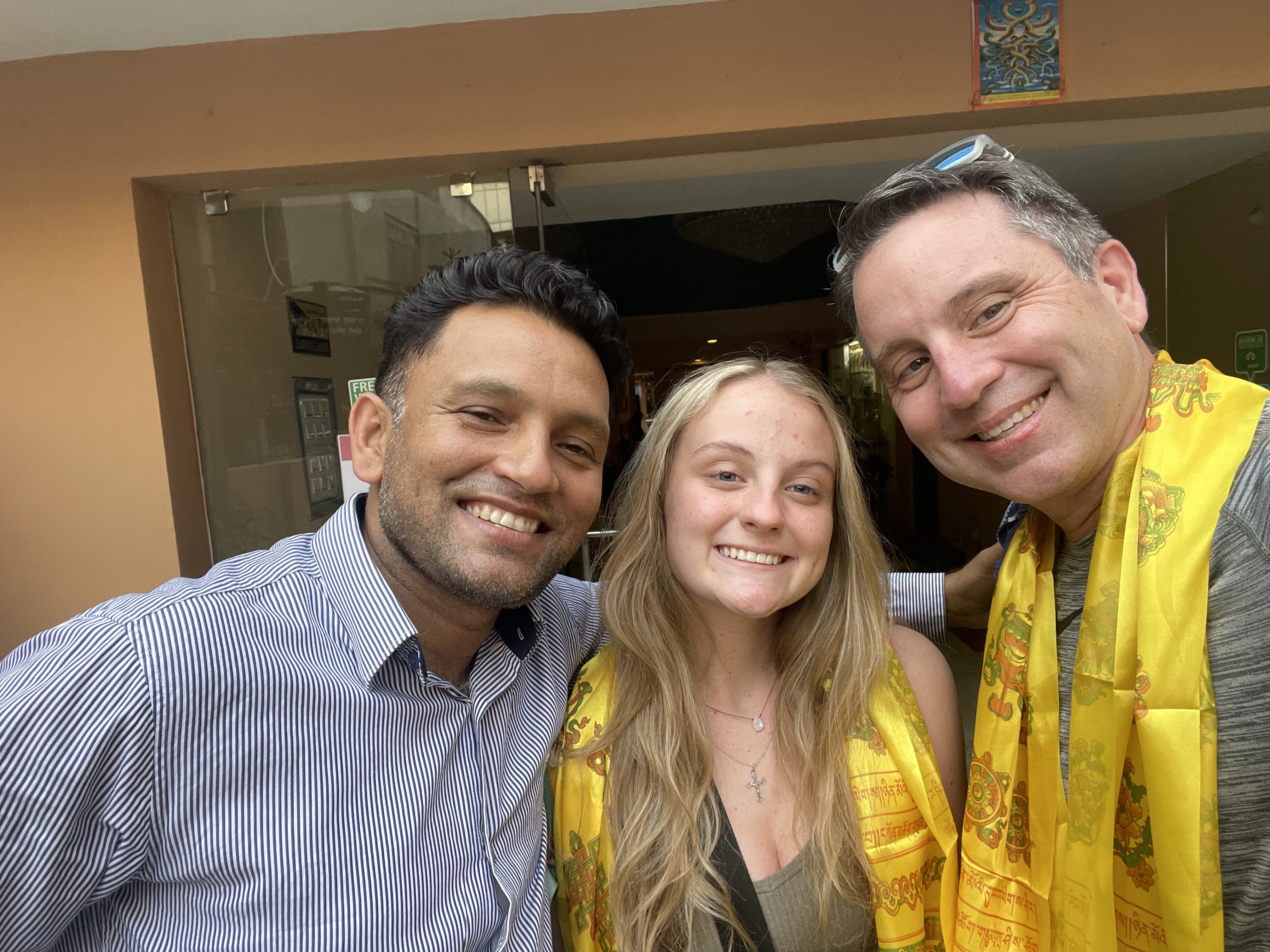
I send 50+ trekkers to Naba at Third Rock Adventures for both of these reasons. I have a referral relationship with them, disclosed openly. The reason I recommend them is they have personally pulled off some of my best trips, including handling problems I caused.
Gear that helps after 50
- Good trekking poles (Black Diamond Distance or LEKI Micro)
- Real ankle-support boots, broken in over at least 50 miles before the trip
- Knee sleeves if you have any knee history
- A real down jacket (synthetic insulation will not cut it above 4,000 m at night)
- A buff or merino neck gaiter for the dust on lower ABC sections
The full packing list covers the rest.
The decision
If you are 50+ and you are reading this trying to decide between EBC and ABC: do ABC. If you are 50+ and you have done significant altitude before and you really want EBC: train for 6 months and go for it. If you are not sure which you are: ABC.
Take the trek quiz for a more specific recommendation based on your specifics. Or send me a note and I will tell you what I would do if it were me at your age and fitness level.