Somebody asked me this question on a flight back from Kathmandu in 2019 and I have been thinking about my answer ever since. They were thirty-something, finance guy, had the money but not the time, and wanted to know whether EBC was worth burning three weeks of PTO. I said yes too fast and felt bad about it for the next six hours.
So I have thought about it more carefully since then. I have been back to Nepal seven times since 2012. I have done EBC, Gokyo plus Renjo La with my daughter Camryn, the Annapurna Circuit, ABC with my younger daughter Callie when she was twelve, Poon Hill, Island Peak, and weeks of just being in Pokhara paragliding off Sarangkot. I have seen what people actually get out of these trips, not what the brochures promise.
Here is my real answer on EBC.
The short version
Yes, EBC is worth it. But you have to do it right, you have to understand what you are actually buying, and you have to know who it is for.
Now the long version.
What people are really asking
When someone asks “is EBC worth it,” they are usually asking three different questions at once.
- Is the difficulty worth the destination?
- Is the money worth what I get?
- Is the time off work worth it compared to other things I could do?
I am going to answer all three. But first I want to address the most common objection, because it trips up a lot of people.
The “you cannot see Everest from Base Camp” problem
This is true. You cannot see Everest from Base Camp. The summit is hidden behind Nuptse and the West Shoulder. If you walk to the rock that says “Everest Base Camp 5364m” expecting to look up and see Everest, you are going to be disappointed.
This is why everyone climbs Kala Patthar the morning after Base Camp. Kala Patthar is a 5,545-meter ridge above Gorak Shep, and it is the viewpoint. You hike up at 4:30 AM in the dark, you reach the top just as the sun is cresting Lhotse, and you watch Everest light up gold.
That moment is the entire trip in a single thirty-minute window. It is the moment that closes the case on whether EBC is worth it.
Is the difficulty worth it?
EBC is hard but it is hard in a manageable way. You are not climbing. You are walking. Granted, you are walking for fourteen days at altitude, with some long days and some cold nights, but you are not roped up and you are not technical.
The difficulty profile is:
- Daily walking: 5 to 7 hours, with elevation gains of 300 to 800 meters
- Altitude: you sleep above 3,000 meters for nine nights, above 4,000 for five
- Cold: minus ten Fahrenheit some nights in the teahouses up high
- Hygiene: you will not shower for two weeks. Get over it.
For a reasonably fit American who can hike all day in the Rockies or the Sierra, this is doable. I took my daughter Callie to ABC at age twelve and she crushed it. You do not need to be an athlete. You need to be patient, mentally tough enough to handle a few bad altitude headache nights, and willing to walk slow.
For a deeper read on prep, I wrote a practical EBC preparation guide that gets into the specifics.
Is the money worth it?
EBC runs $1,800 to $3,500 for a full guided trek with a reputable operator. That includes guide, porter, teahouse lodging, food, Lukla flights, and all the trekking permits.
What you are buying is not just the trek. You are buying:
- Two weeks of being completely unplugged from your normal life
- Access to a region you cannot meaningfully visit any other way
- A daily structure of walking, eating, sleeping, and not making decisions
- The Kala Patthar moment
Honestly? It is one of the better dollar-per-experience deals I know of. A week at an all-inclusive Mexican resort costs roughly the same as the trekking portion of EBC. You get tan. You get drunk. You forget it within a year.
EBC stays with you. I can close my eyes right now and walk you through the Phakding bridge, the Namche bakery, the first time Ama Dablam comes into view at Tengboche, the prayer wheel at the Pangboche monastery. That is what you are buying.
Full numbers in my 2026 Nepal cost guide.
Is it worth the time off work?
This is the real question, and it is the hardest one to answer.
You need three weeks. Not two. Not “I can squeeze it into ten days.” Three weeks, with buffer days on either side of the Lukla flight, because Lukla weather cancels flights regularly and you do not want to miss your international flight home.
For most Americans, three weeks is a real chunk of annual leave. The question is what you would otherwise do with it. If the alternative is a week in Mexico and a week visiting your in-laws, then yes, EBC is worth those three weeks ten times over. If the alternative is your kid’s graduation or your wedding, do not pick EBC.
The people who regret EBC are almost always the ones who tried to do it cheap, short, or with the wrong operator. The people who do it well almost never regret it.
EBC vs the alternatives
The most common question I get is EBC vs ABC. I wrote a full comparison post on it, but the short version is: ABC is the better trek if you have ten days, like greener scenery, and want a gentler altitude profile. EBC is the better trek if you have three weeks and you want the high mountains.
If you want the Everest region but you want something slightly different, Gokyo Lakes is genuinely my favorite Everest-region trek. I did it with Camryn over the Renjo La pass and it is the more beautiful trip, full stop. Fewer people, turquoise lakes, and you still get the Everest view from Gokyo Ri.
If you have done Kilimanjaro and you are wondering how EBC compares, that is a different question and I wrote a full EBC vs Kilimanjaro post for you.
The real reason EBC is worth it
Here is the honest answer. EBC is the goal, the pin on the map, the photo you came for. But the true magic of the trek lives in everything that is not Everest Base Camp itself.
It is the quiet stretches of trail where the only sound is birds. It is the magical mountain vistas around every corner, not just the famous ones the guidebooks promise. And it is the unbelievable graciousness of the Nepali people you meet along the way, in teahouses and on suspension bridges and in tiny villages you have never heard of.
Base camp is the excuse you needed to be there. Everything else is the reason.
How to do it right
Three things matter, in this order.
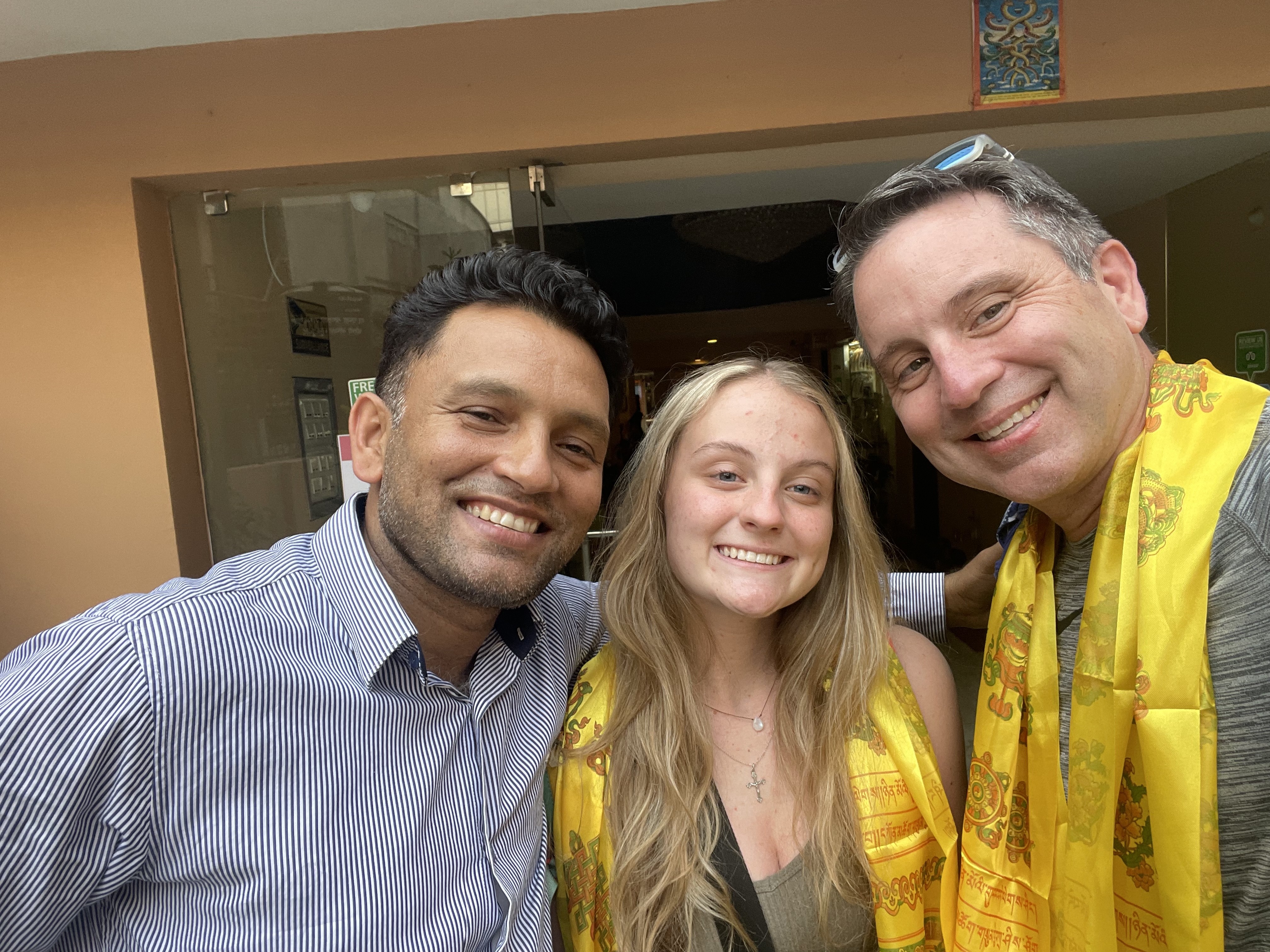
One: pick the right operator. This is the difference between a trip that ruins you in the right way and a trip that ruins you in the wrong way. I send everyone to Naba at Third Rock Adventures. (Disclosure: I have a referral arrangement with Third Rock and earn a small fee if you book through me. I would send people there regardless, because I have known Naba since 2012 and he is the reason most of my Nepal trips have gone well. He once organized a helicopter rescue for me out of Lukla.) Here is my full breakdown on why, and a broader how-to-choose post for context.
Two: build in buffer days. Two extra days minimum for Lukla weather. Do not book a tight return.
Three: train for it. Not gym training. Hike training. Get yourself out doing 12-mile days with a pack, two months out. Your body will thank you.
The verdict
Yes, EBC is worth it. If it is on your list, do it. Do not wait until you are sixty. Do not assume you will have more time later. Pick a date in October or April, book a real operator, train through the summer or winter, and go.
Take the two-minute trek quiz if you are not sure EBC is the right one. Or reach out directly and I will tell you what I would do if it were me.