When’s the best time to trek in Nepal. The short answer most people want is October or April. The honest answer has more nuance than that, and after seven trips spread across different seasons, I can tell you when each one shines and when each one bites.
I’ve trekked Nepal in October, November, March, April, and once in early December. I’ve also spent time in Pokhara during the shoulder months when nobody else was around. Here’s how I’d actually think about timing your trip.
The two main windows
Nepal has two main trekking seasons: pre-monsoon spring (March through May) and post-monsoon fall (October through November). Outside those windows, things get complicated, and complicated is fine for some people and bad for others.
Fall: late October through mid December
This is the peak season for a reason. The monsoon has just ended, so the air is clean, the mountains are clear, and the trails are dry. October stability is the best of the year. November is colder, especially after the second week, but the skies stay clear.
Trade-off: October is crowded. The EBC trail in mid-October feels like a highway. Teahouses fill up. If you want the iconic clear-air mountain photos and you don’t mind sharing them with a few hundred other trekkers, October is your month. If you want quieter trails and you don’t mind colder mornings, push into late November and early December.
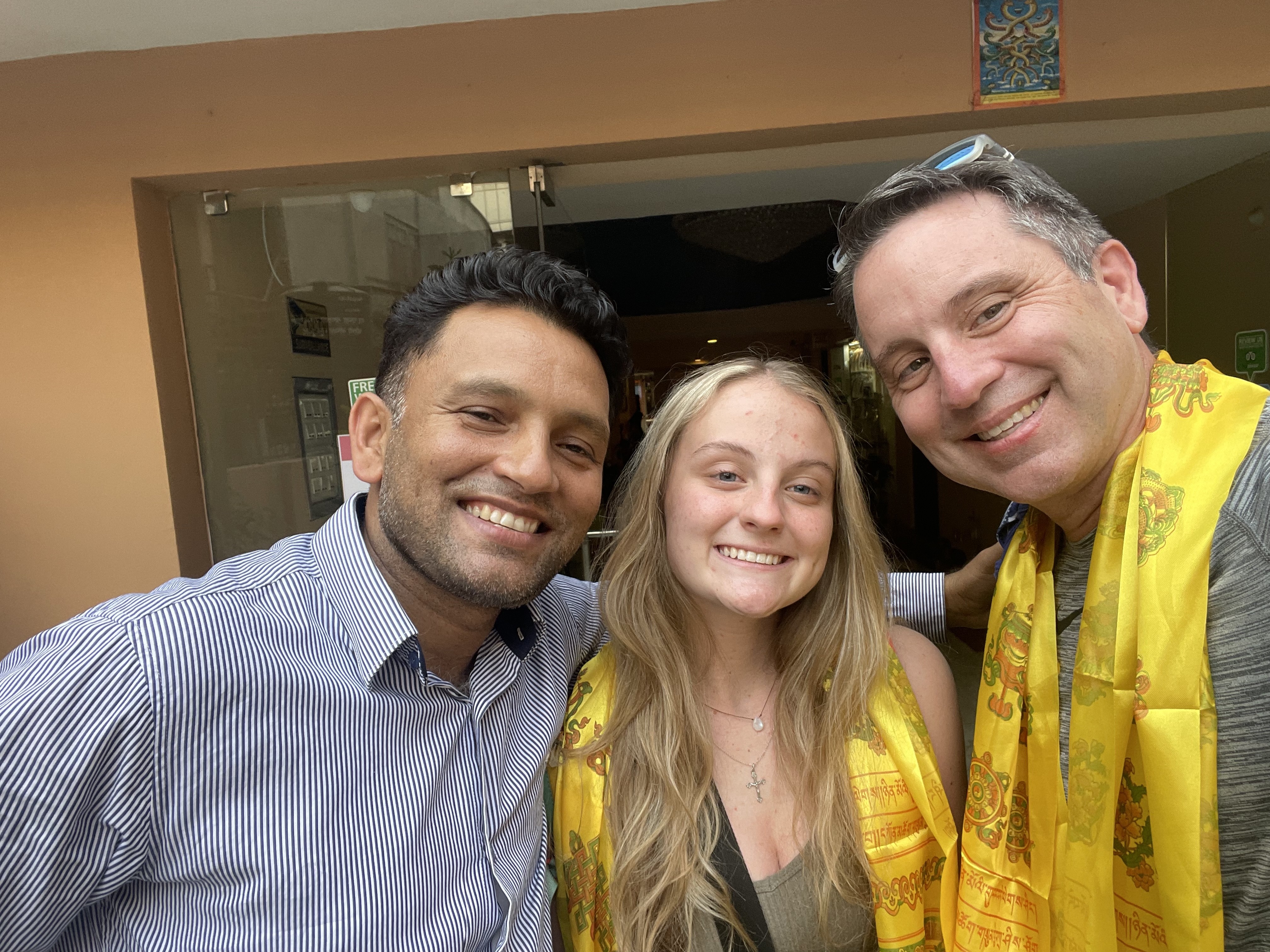
I did Gokyo and Renjo La with my daughter Camryn in late October and we got photographs that looked unreal. But we also walked into Namche on a Saturday afternoon and could barely find a teahouse.
The window I keep coming back to is late October through mid December. It is just after monsoon, the air is unusually clear, and the views are sharper than at any other time of year. Crowds are smaller than the spring rush. The early morning starts in that window feel quiet and personal in a way they do not in the peak weeks. I would not trade them for anything. If you can travel late in the fall window rather than smack in the middle of the season, that is the move.
Spring: March, April, and early May
Spring is the other prime window and my personal favorite. April brings the rhododendron bloom in the middle-elevation Annapurna region and parts of the Everest region, and the lower trails turn into a corridor of red and pink. I will not pretend that’s not a factor.
The weather is warmer than fall. The mountains can be a little hazier later in the day as the season progresses, but the high-altitude views are still strong. Crowds are real but slightly less than October.
March is colder up high and stable down low. Late April is warmer with more afternoon clouds. Early May is the warmest, but the haze can build and the season is closing.
If you’re picking spring, I’d aim for late March to mid-April. That window catches the bloom and the stable weather without the late-season haze.
The shoulder months
Late February and early December are the shoulder months that get less attention. Both have a case.
Late February
You’re at the tail of winter but the trails below 4,000 meters are usable and quieter. Lower-elevation treks like Poon Hill or lower ABC sections work well. Higher treks are riskier because passes can still be snowed in and you can get caught in late-winter storms. If you want solitude on something like the lower Annapurna trails and you’re willing to layer up, late February rewards you.
Late December
Once you get past mid December the main fall window has closed, and you are into colder, quieter territory. Late December can still hold clear weather and the crowds are mostly gone. It’s cold up high, and I mean actually cold. Sleeping bags rated to minus 15 Celsius become important. EBC is doable for fit trekkers into late December if you are prepared. ABC is fine for most people. Just understand that teahouses higher up may have fewer guests, less heat, and shorter menus.
I trekked in early December once, inside the main window, and the photos are some of my favorites. Empty trails, blue skies, and a kind of quiet you do not get in the peak weeks of October.
Monsoon: June through September
For most American trekkers planning their first Nepal trip, the answer to monsoon is no. The trails are wet. Leeches show up in the lower forests. The mountain views are gone for days at a stretch. Flights to Lukla get canceled. Landslides close roads.
There are exceptions. The Mustang and Dolpo regions are in the rain shadow of the Himalaya and are actually great in monsoon. But those are not first-timer treks. If you’re considering EBC, ABC, Annapurna Circuit, Gokyo, or Langtang for your first trip, monsoon is a hard no.
Deep winter: late December, January, February
High-altitude treks like EBC and the high Annapurna Circuit get genuinely difficult in deep winter. Some teahouses close. Many close at the highest elevations. Passes are snowed in. The cold at Gorak Shep at night is brutal.
That said, lower-elevation treks work fine. Poon Hill in January is a clear, cold, gorgeous trek. Lower ABC sections work for the experienced and prepared. If you genuinely want a Nepal trek in winter, talk to an operator who knows which itineraries are realistic and which are not.
How to actually pick your window
Think about three things in order: what trek you’re doing, what you care about most, and what your real schedule allows.
For most first-timers doing EBC or ABC, I’d point you at the late October through mid December, or the first half of April. That’s the sweet spot of clear views, manageable temperatures, and stable weather.
If quiet trails are more important than perfect weather, late November or early December are your friends. If rhododendrons matter to you, April. If you have flexibility, October. If you’ve trekked at altitude before and you want a quieter trip, push the shoulders.
If you’re choosing a trek now and weighing seasons at the same time, the Find the Right Trek quiz walks through both at once.
A note about Pokhara and Kathmandu
If your trip includes time in Pokhara and Kathmandu, the seasons there are gentler. Pokhara in fall is paragliding weather (I’ve flown off Sarangkot more times than I can count). Kathmandu in spring is warm and lively. Both are pleasant in monsoon if you’re stuck waiting out a delay, although the mountain views from Pokhara disappear behind cloud.
My one-line answer if you forced me
For a first Nepal trek on EBC or ABC, book for late October through mid December. If that window does not work for your calendar, late March to mid-April. Everything else is a special case.
For more specific advice for your trip, tell me about it. Dates, trek, who’s coming, how altitude treats you. I’ll tell you what window I’d pick.
Nepal is one of those countries where the season is half the experience. Pick well.
Looking at the Annapurna Circuit specifically? Read my 2026 take on the Circuit for trek-specific timing considerations.